
Postcards from Germany
A brief journey into the eye of the raisin-snail
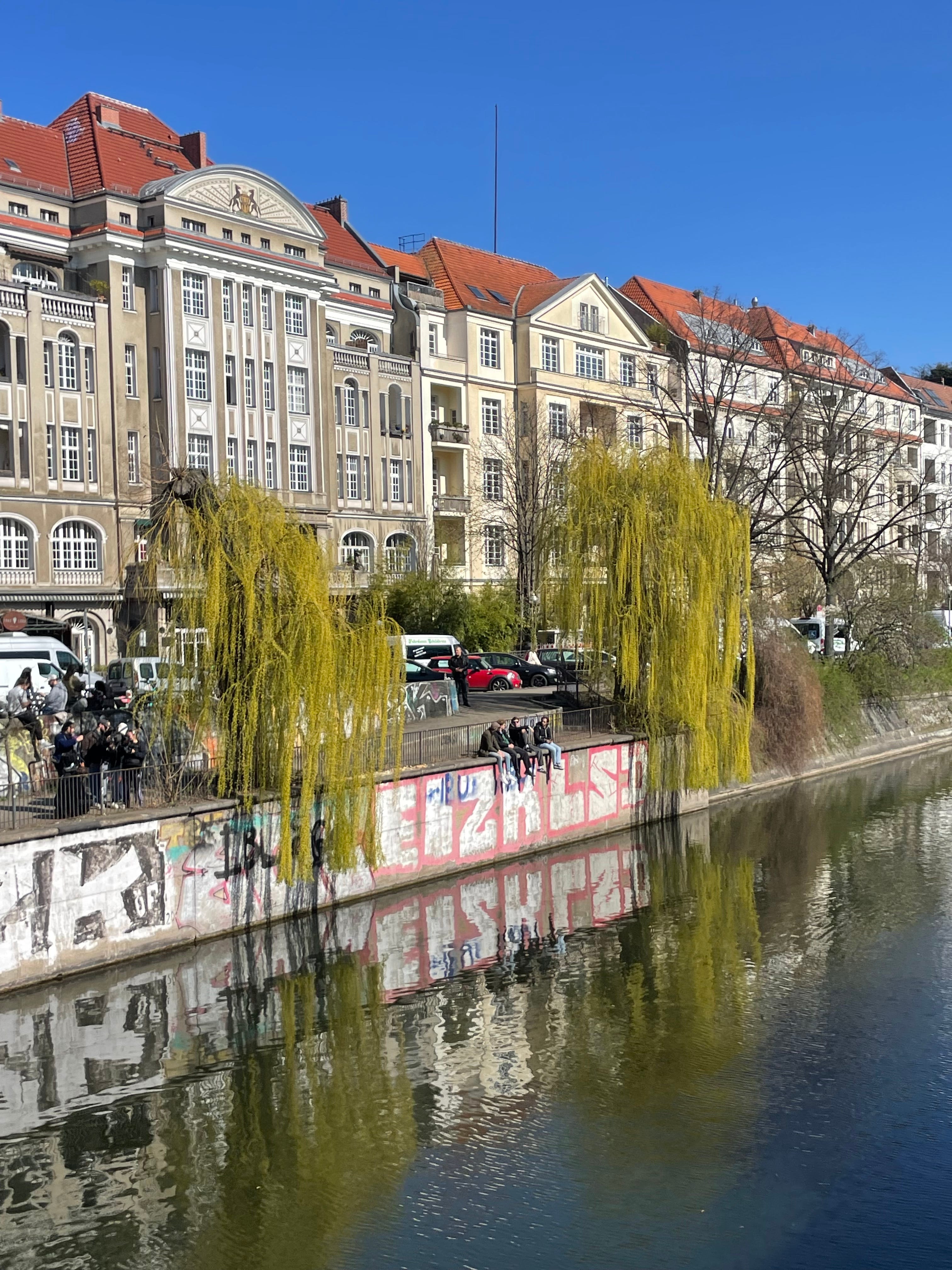
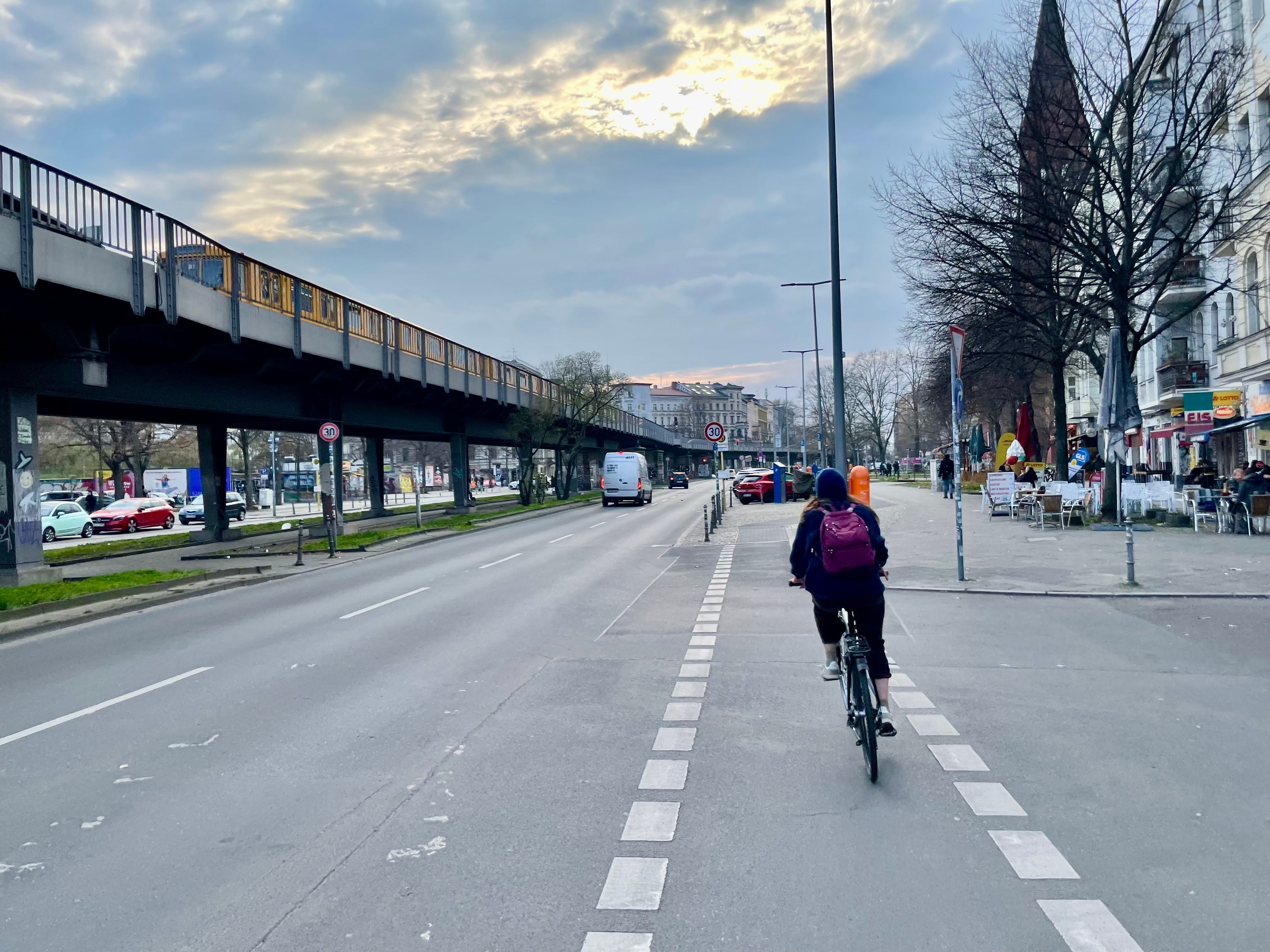
As I often do following a trip, I posted a few photos of my recent visit to Germany: biking beneath the elevated tracks at Schlesisches Tor as a train approached; bright green willow trees along the canals of Winterhude in Hamburg, people sitting on the graffitied banks of the Kreuzberg canals in Berlin; a panoramic view of the carnival and from the roof of a renovated bunker in St. Pauli, a man hauling twenty giant crates of beer across the street along the cafes of Gräferstrasse.
It was lovely to escape into these scenes and be free of domestic worries for a week. But I’d also like to recall a few impressions and observations before they fade, since this does seem like a unique and perhaps pivotal moment in German/European-American relations.
I was expecting more resentment and even anger from people, like I did during the George W. Bush / “War on Terror” years, but instead people seemed more sympathetic, like they’re sorry this is happening to us. “This” being the current administration’s all-out war on cultural institutions, national parks, education, and our social programs, which are already far less funded in the U.S. than Canada/EU. I told someone the current U.S. news cycle feels like being at Thanksgiving dinner with a boorish drunken uncle, except now that uncle is coming to dinner every night, and he’s going to stay drunk.
No one we talked to plans to visit the U.S. anytime soon, even those who have lived or studied here in the past. Three different people cited the stories about foreign visitors to the U.S. being detained after having their social media combed through for posts or opinions our government might find objectionable. They don’t want to risk detainment or longer-term bans from the country and would rather wait it out.
I talked a lot about this with a Canadian friend who has lived in Germany for 15 years, and he said that for both of his home countries, this is a big moment — a time to step out from America’s shadow, to redefine themselves as more independent nations, cultures, and even armies, which won't happen overnight but is a scary and electrifying thought. While they wouldn't have voluntarily created this break in relations, being pushed away so suddenly has left them with no other choice, and they're going to embrace it.
The sudden rise in tariffs, almost certain rise in prices, disruption of global trade, cuts to government services, and overall economic uncertainty kept reminding me of a phrase “Die fetten Jahre sind vorbei,” (“the fat years are through”) which was the title of a 2004 German film (translated as “The Edukators” in English, though the U.S. edition is lacking the final scene where Daniel Bruhl and friends become eco-terrorists). The film is apparently still in the zeitgeist there as well, as it has now become a popular play.
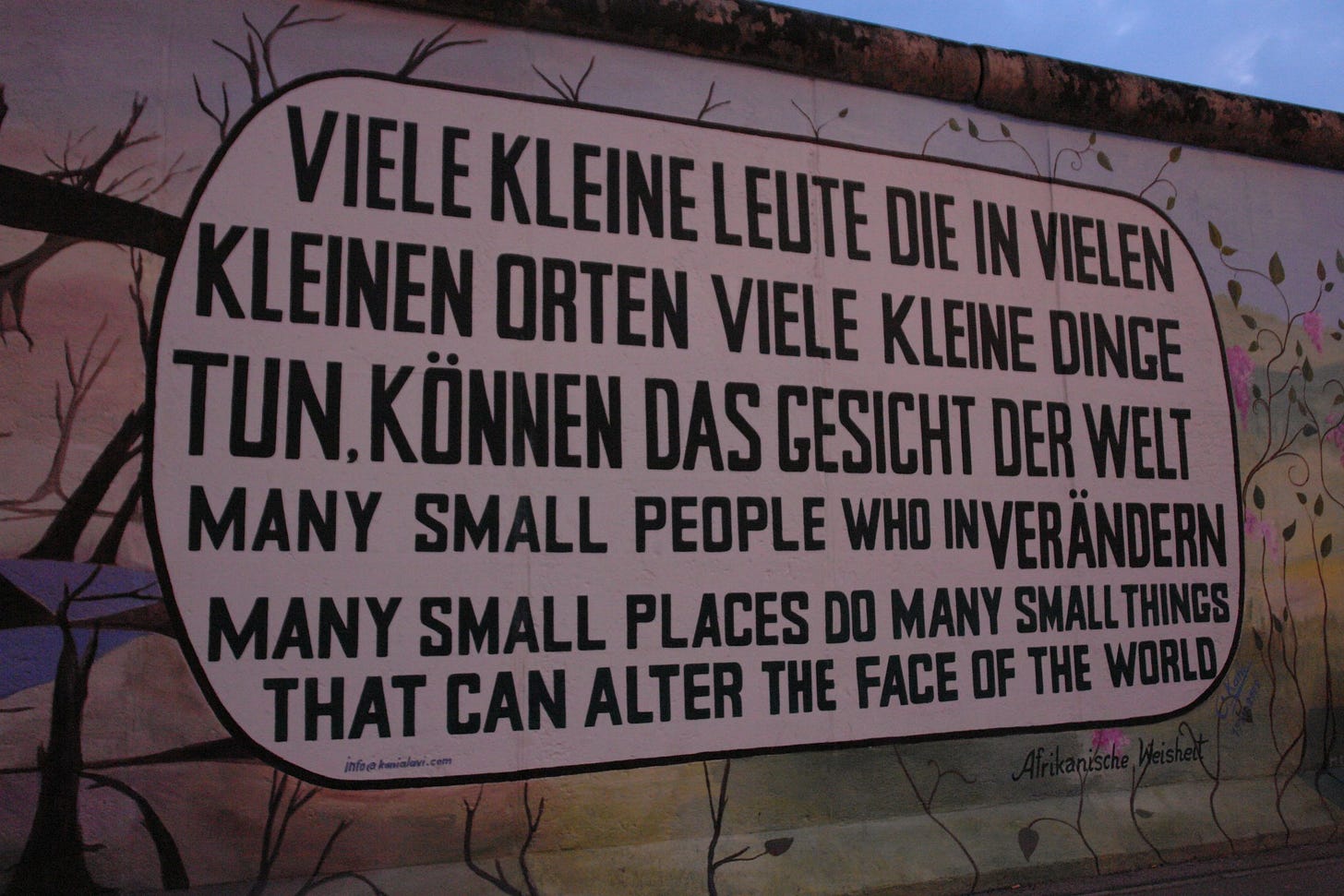
On a more positive note, I think there’s still plenty of hope that we will avoid an all-out slide into fascism, that even if the larger law firms, corporations, and universities are capitulating, that smaller institutions and individuals still have a voice. The “Hands Off” protests this weekend reminded of this panel from the East Side Gallery in Berlin:
And the Luis Buñuel quote:
“A writer or painter cannot change the world. But they can keep an essential margin of non-conformity alive. Thanks to them, the powerful can never affirm that everyone agrees with their acts. That small difference is very important. When power feels itself totally justified and approved, it immediately destroys whatever freedoms we have left, and that is fascism.”On my Sunday night in Hamburg, I found myself in a small smoky corner bar having beers with a stranger and quatsching about a variety of subjects, in this case his career as a shampoo salesman for a global corporation, the intimate Dr. John concert he attended in Japan in 1987, and the proper footwork for the Northern Soul dance. Joseph, who was Scottish but had lived in Germany for 20 years, told us about his Ukrainian mother escaping the camps as a child in WWII, how he’d studied history for his entire life, and how the current momentum building globally would most likely only end with violence or war. I won’t reprint his comments, but he was not a fan of J.D. Vance. He talked about his son and daughter’s uncertain future in the EU. “I believed in Europe,” he said, near tears, before being interrupted by a fellow barfly who staggered over to request the German version of “Papa Was a Rolling Stone” (Joseph also doubled as DJ). Before we left, Joseph embraced us, offered some advice, and told us “The world needs America.” “And we need the world,” Jenn replied.
Naturally, topics like TikTok and AI came up, especially among photographer/graphic designer friends whose work is affected by it all. While it’s tempting for someone my age to tune out whenever those topics come up, I appreciated my friend Chris’s thoughts on the subject: “The quickest path to irrelevance is refusing to adapt to change,” he said. “We see it happen with every generation. Refusing to consider new ideas, and holding on for dear life to the way things used to be.” I’m still pretty reluctant to mess with TikTok, but I think it’s a good point!
Being around new/familiar German words reignited my creative faculties and I started composing songs in my head around some of the words I liked. The most catchy one is a surfer-ballad called “Rosinenschnecke,” named after the spiral pasty or “raisin snail” available at all the bakeries, but in this case the object of one’s yearning and affection. The other is a garage rock song called “Kurzstrecke” the type of subway ticket that’s cheap because it’s only good for a few stops. In this case it’s a metaphor for a relationship that was never destined to last and if you try to stretch it out longer than intended bad things could happen.
Other notes: I saw a trash can where the ash tray was smoldering and looked like it was on fire. That was amusing.
French fries with mayonnaise are still delicious. It always sounds gross to people here but the Dutch-style “mayo” is leaner and sweater.
Swiss artist Franz Gertsch’s photorealistic paintings and intricate woodcuts (on display for one more month at Deichtorhalle) are impressively enormous.
German cartoonist duo War and Peas released a new book out in both countries last week (I edited the U.S. edition, which you should totally buy), which is timely and hilarious.
I found a copy of swiss musician Fai Baba’s instrumental band Löwenzahnhonig on vinyl and picked it up along with records by Hamburg natives Silvan Strauss and DJ Koze.
The only thing I failed to do over there was eat Spaghetti Eis, an elaborate ice cream dish made to look like a platter of spaghetti. But don’t worry. I have all the utensils needed to make it and will be serving it here this summer.
Thank you for reading and bis später!
Ah yes, the cultural phenomenon that is Spaghetti Eis. Loved reading your reflections about a country I hold dear. ✨